
Ranga's Take on Gemini Guided Learning
Google Gemini released Guided Learning to all users yesterday.

So it was only a matter of time, after OpenAI’s launch of Study & Learn, until Google fired back and yesterday they did just that. Guided Learning in Gemini had somewhat flown under my rumour radar but when I got access yesterday, I had to take a look to see what might be possible.
As with all thing LLM, I try to do so with an element of pragmatic enthusiasm because technology should enhance, not drive, pedagogy.
So let’s take a look, step by step, at my first visit. I do this because I like to explore without any guidance as a first time user, to try to empathise with users with minimal guidance or experience.
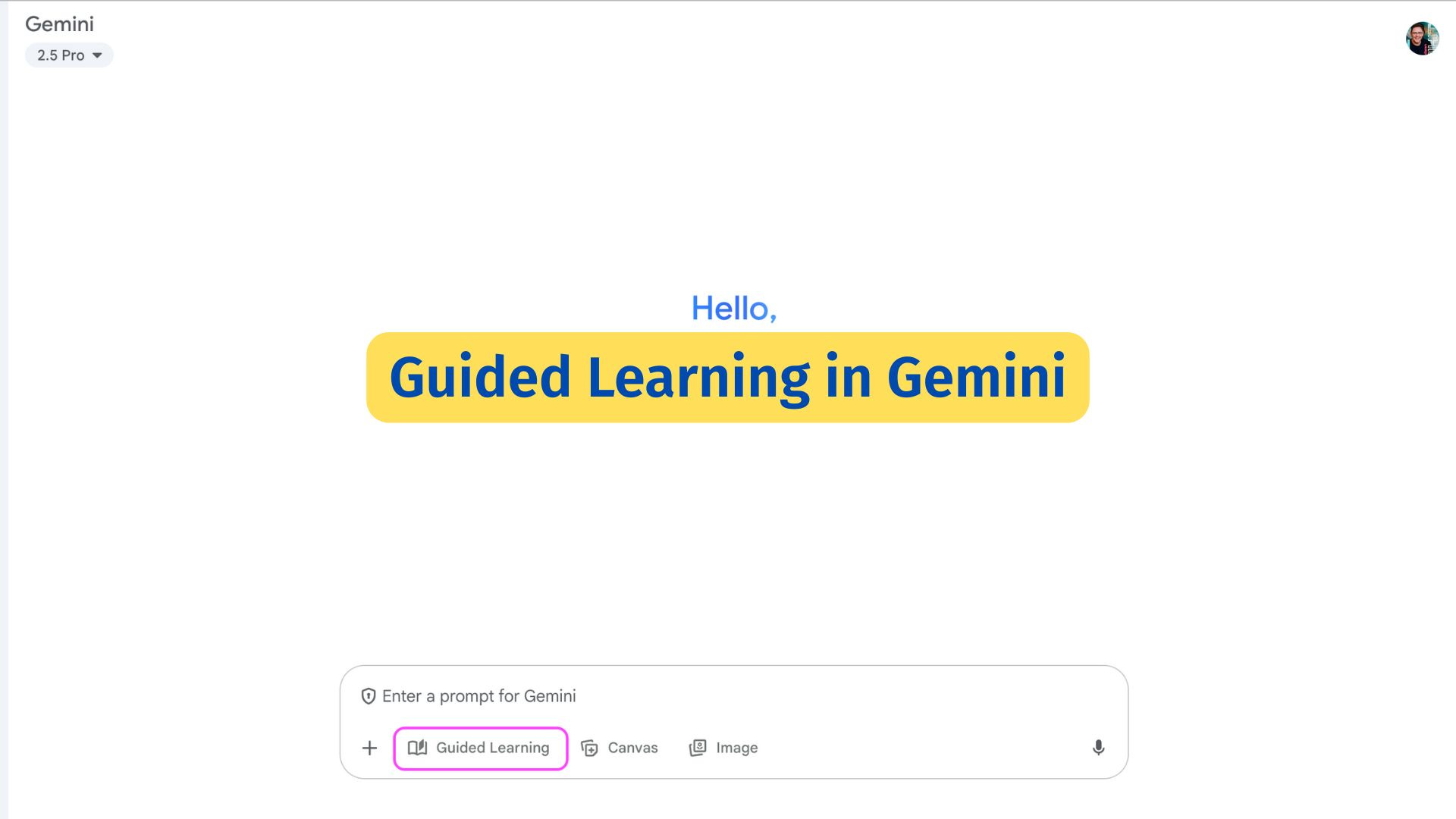
First up, Guided Learning is easy to find for all users. I happen to be in 2.5 Pro in this screenshot but it appears in Flash mode too. I dived straight in by asking Gemini to “help me learn about longshore drift'“.

As we can see, Gemini asks me where I’d like to start from 3 available options; a step by step of how longshore drift works, the coastal landforms it creates or the human impact of longshore drift. I simply responded with the number 1 and we entered into a 1:1 style tutoring style back and forth. Then, unrequested, Gemini presented me with a visual graphic to help me process the information. This is very welcome for me as someone who is neurodiverse and appreciates multi-modal approaches to learning.
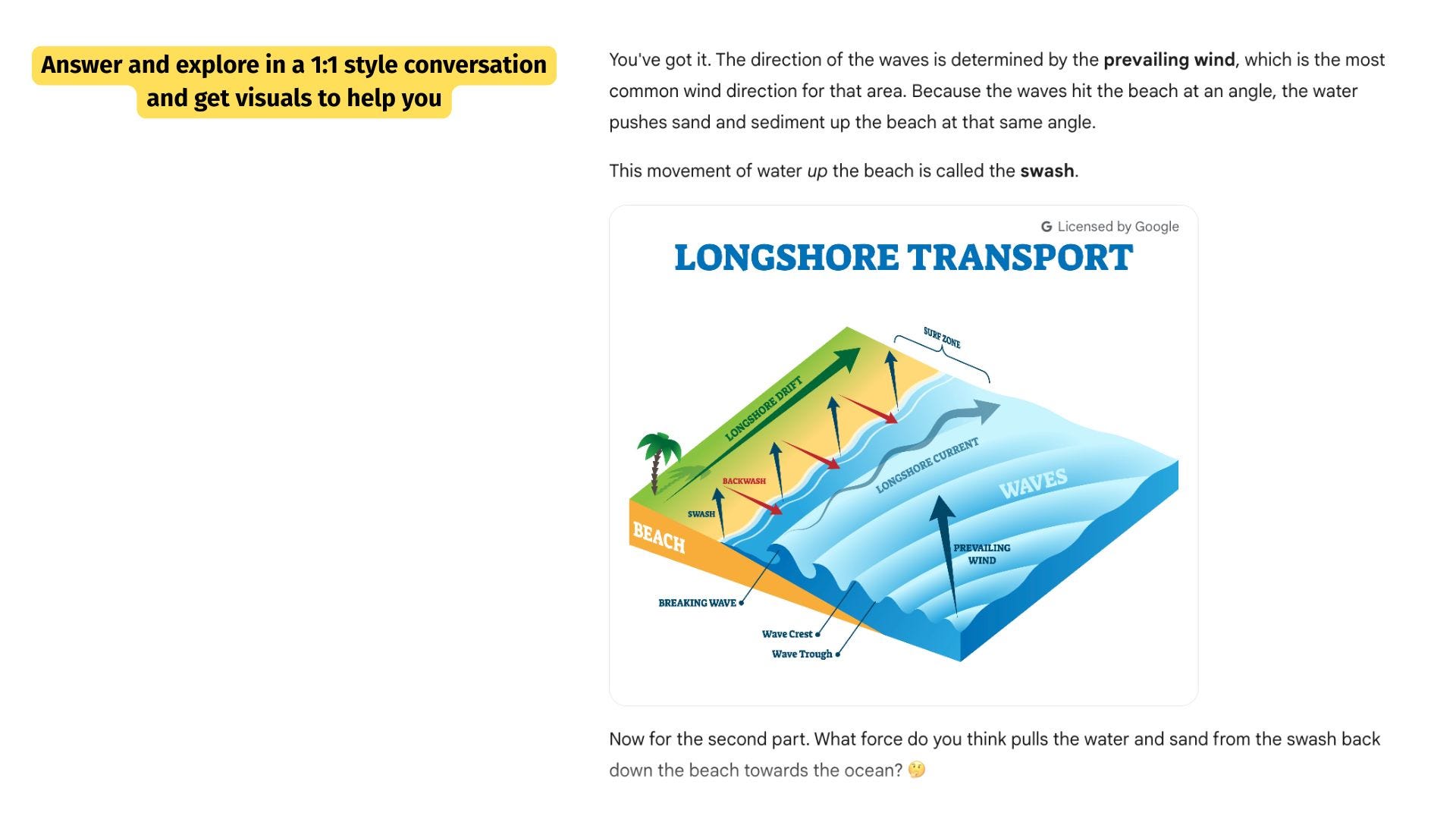
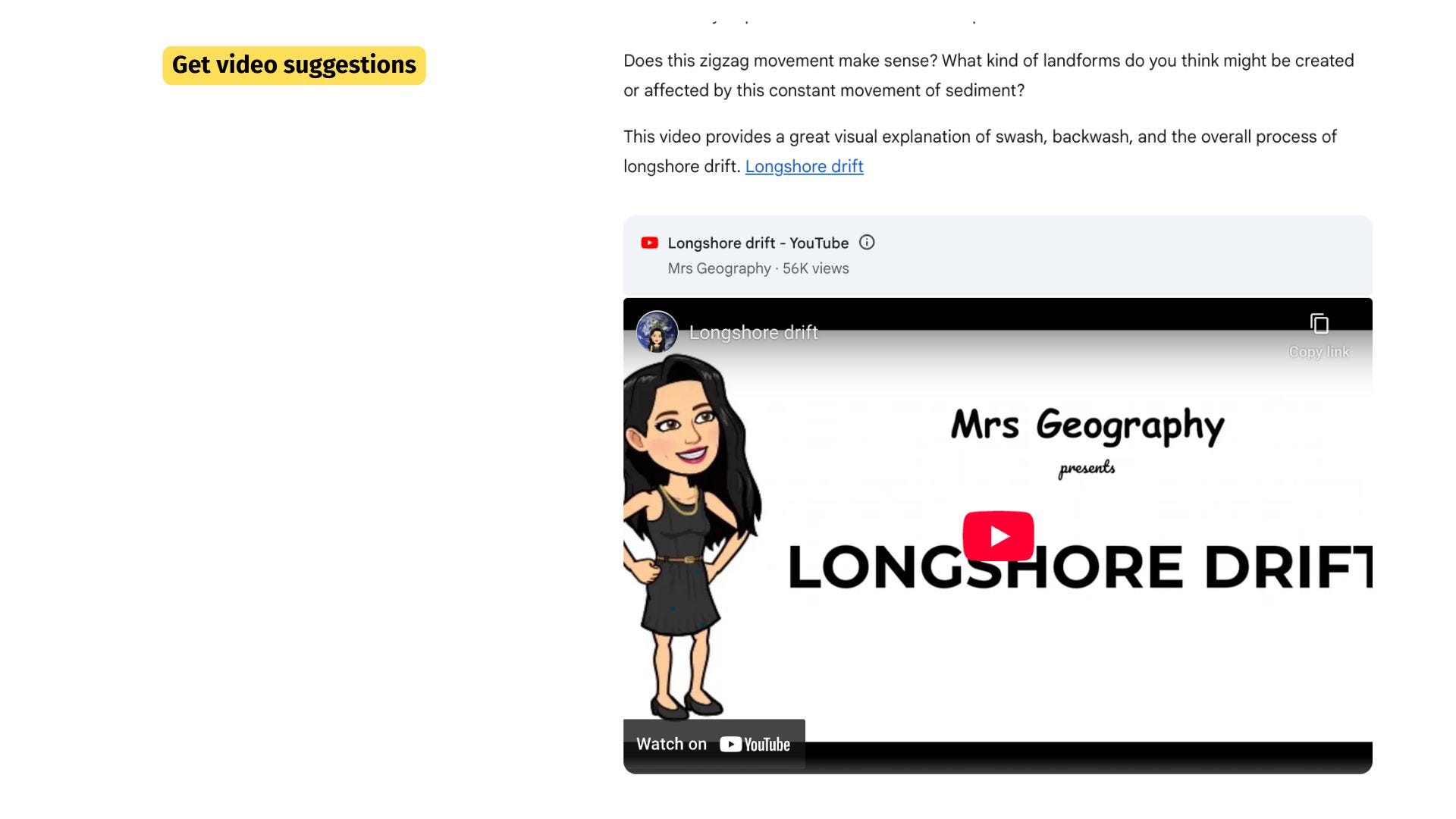
Gemini guides me and challenges me to answer questions on the topic, encouraging me to think more deeply about concepts. It even suggests and links some relevant Youtube videos (with real links, not made up ones!)
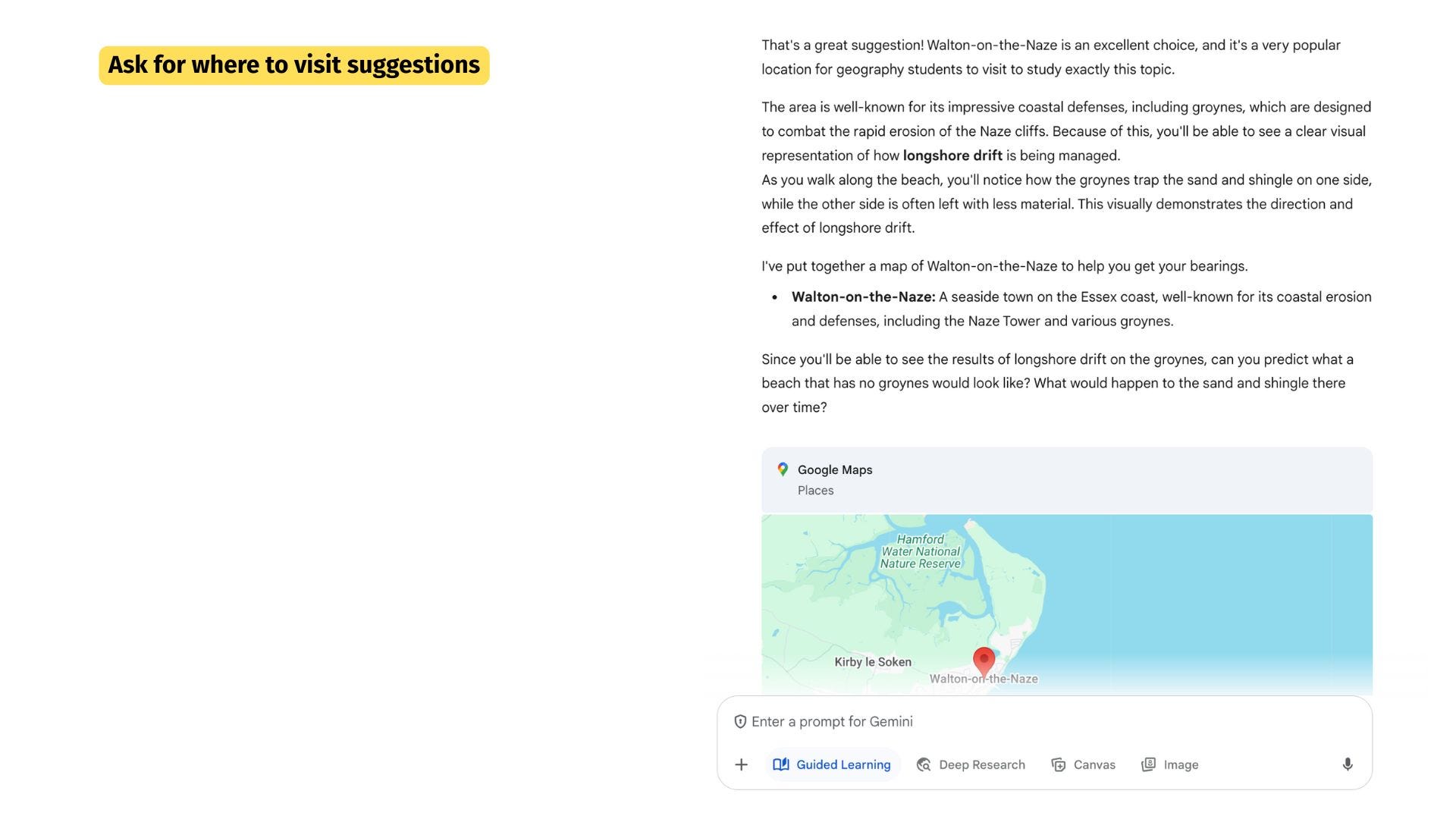
I then asked for some ideas where I could visit in the UK to see longshore drift in action. It made some suggestions after I gave it the county I live in (nothing more) but I then suggested my own (based on my own experience*). Gemini then helped by providing a live Google Maps to help me get there.
*Remember, AI is not a substitute for your own factual knowledge and expertise, it’s there to enhance it.
I then decided I’d like to do some formative assessment so I asked for a multiple choice quiz, with distractors and it duly provided in a few seconds.
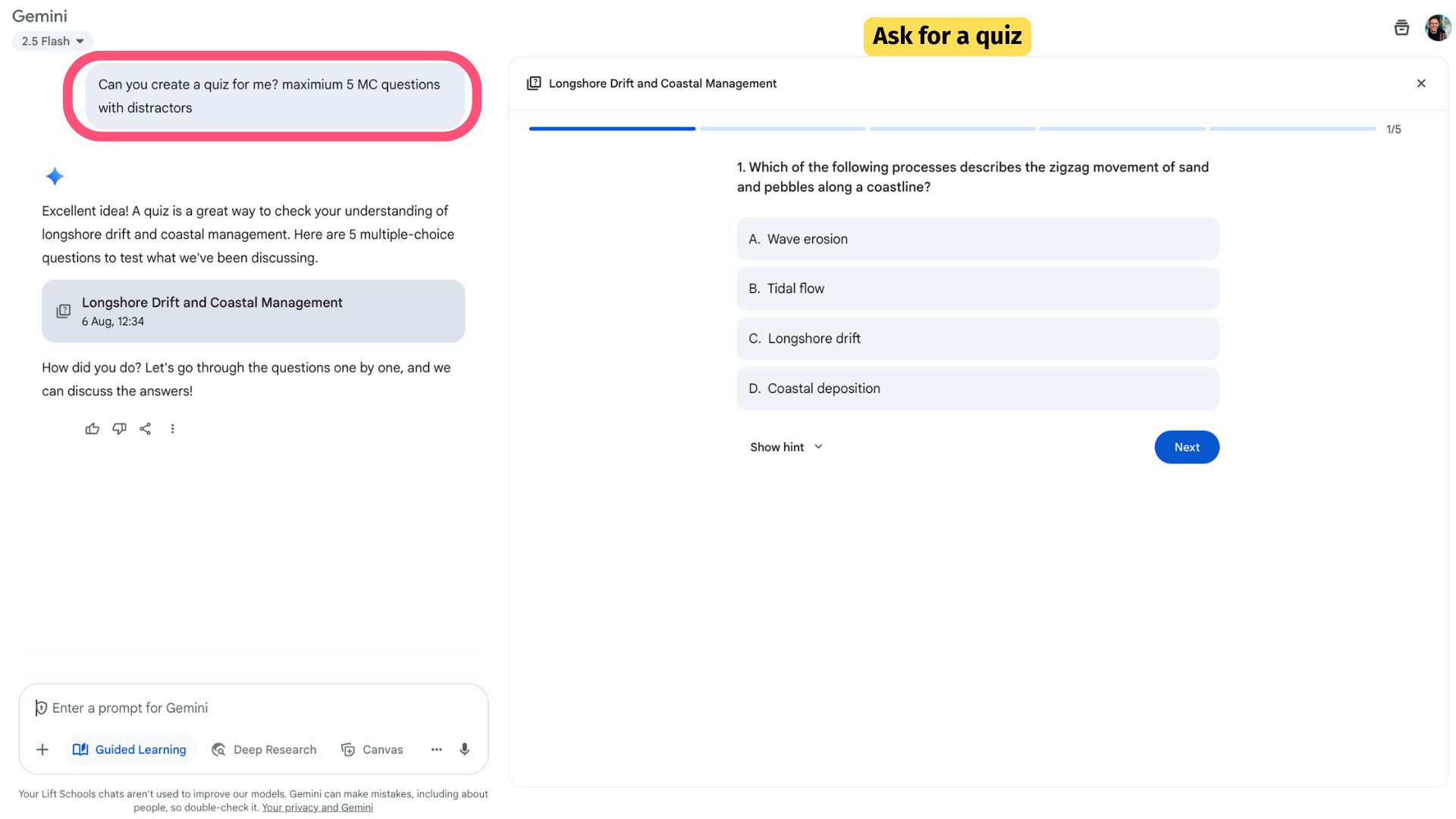
I completed the quiz, deliberately making some mistakes to see what would happen. Gemini duly offered me a quick overview summary of how I performed in the quiz with score, % and a basic question breakdown.

I noticed the option to analyse my performance, so of course, I clicked to see what would happen.
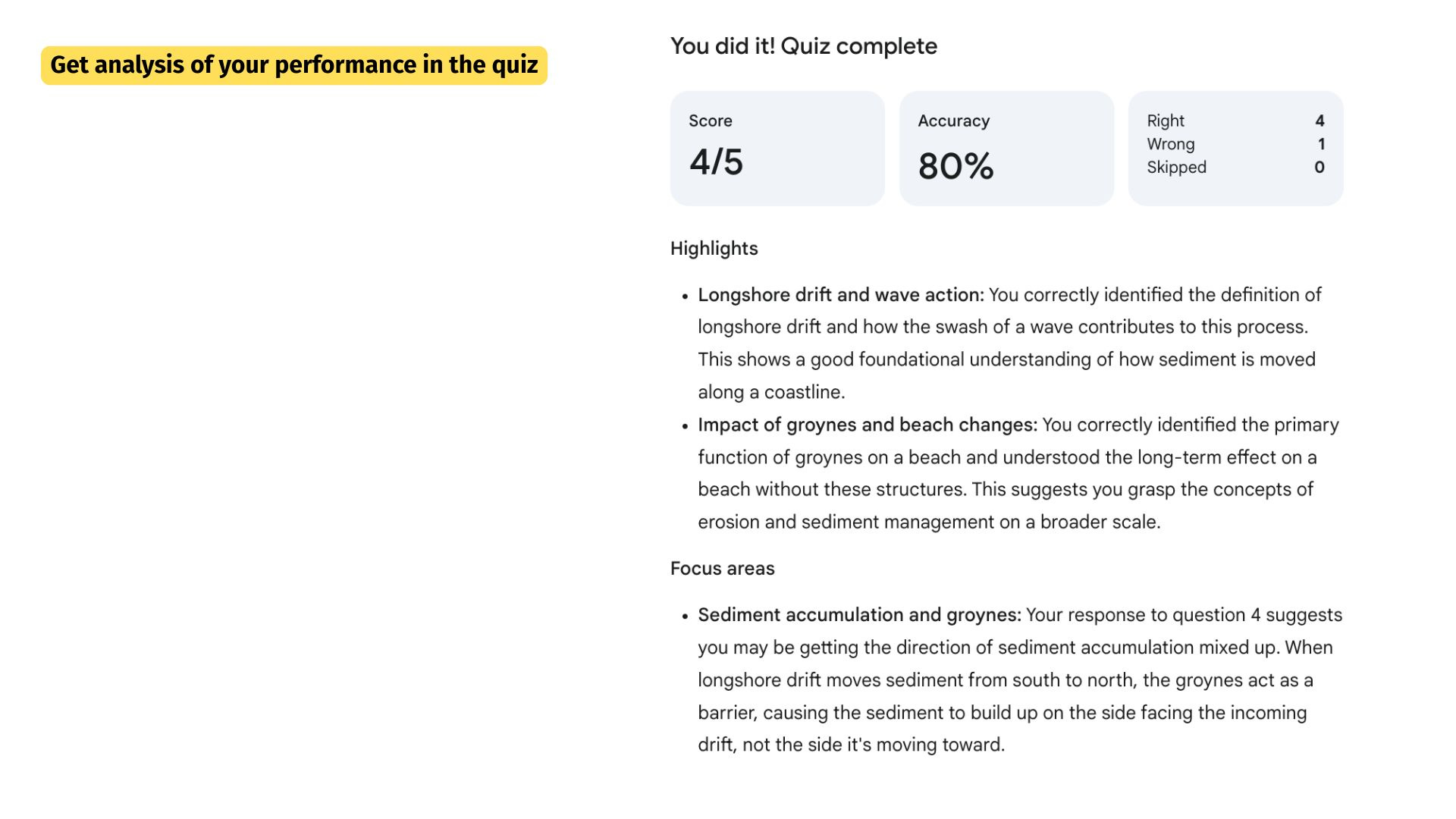
It offered me a textual breakdown of highlights and focus areas for further development. Quite useful consolidation and support so I asked it to create me a study guide.

It then opened up a Canvas to create the guide. At this point I could work with Gemini to shape this guide and then either export it to Google Docs or choose to create a website, infographic, further quiz, audio overview or “something else”
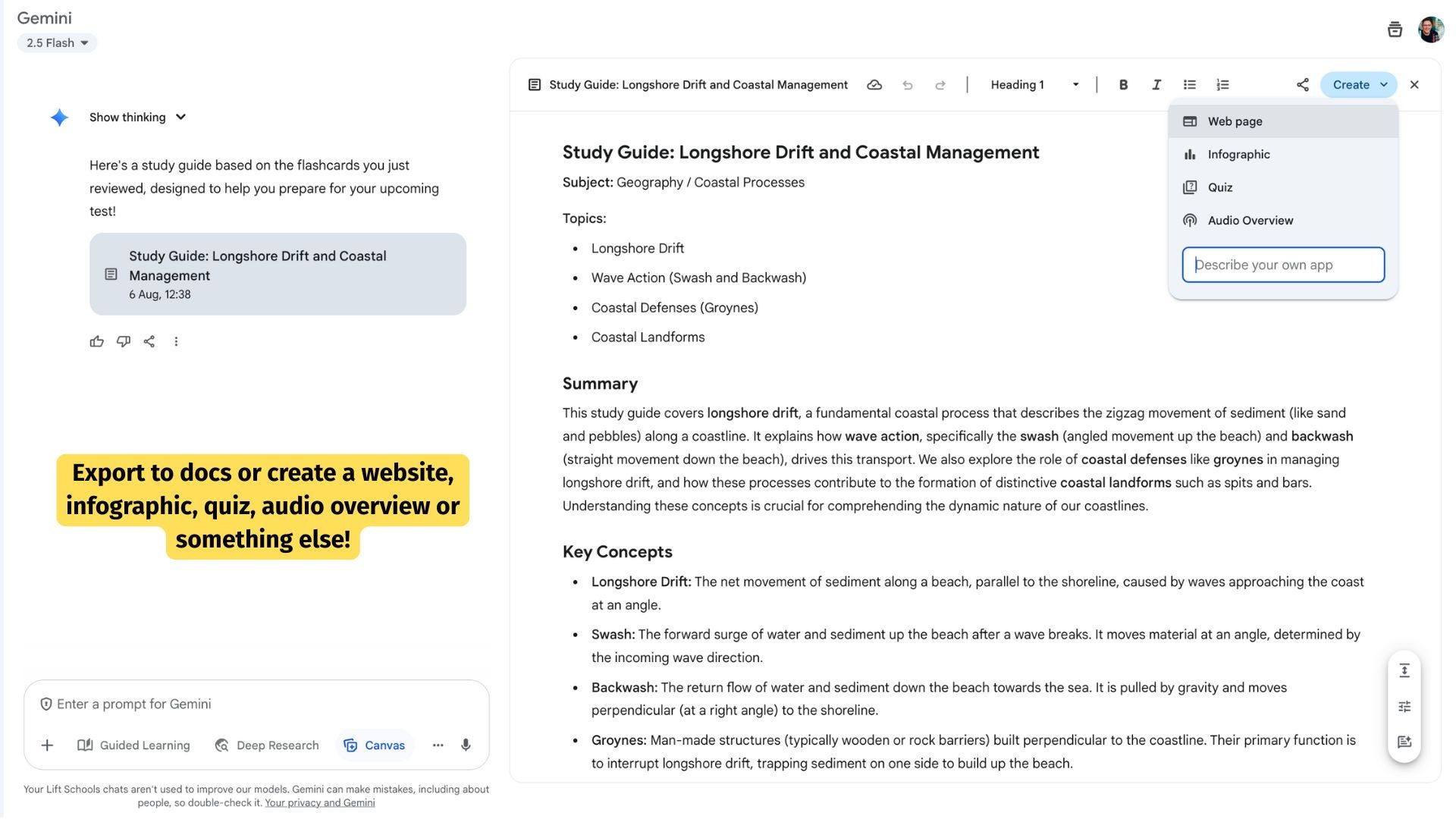
.On this occasion, I chose to export to docs.
Overall, I have to say I’m pretty impressed with my first visit. Yes, we do need to validate the information shared and check our sources because it may not be 100% accurate.
Did it guide my learning? Definitely, arguably asking more probing questions than some human counterparts might.
Can I see this being helpful to learners of all ages? Definitely (as long as they understand how to use AI responsibly and safely - but hey, perhaps you could ask Guided Learning to support you with that!)
I’ll be taking a closer look and exploring further in the coming weeks to see how reliable, consistent or formulaic the responses are.
As with all things AI, it’s not a silver bullet, but definitely has potential to support learning in the right circumstances. It could also be really useful for individuals who don’t have access at home to someone who can support their personal study.
Guided Learning is out there for all to use now.
Some will use it well, some will use it poorly. Some won’t use it at all.
But at school level, all learners are being measured by the same yardstick and those that do use it, might gain an advantage over those that don’t. We have to be mindful of this. We have a responsibility to educate young people to make good choices, to teach responsible use, the benefits and the pitfalls.
Doing nothing is not an option, because the game is changing on almost daily basis.
I’d love to hear about other people’s experience with Guided Learning so please let me know in the comments if you’ve given it a test drive.